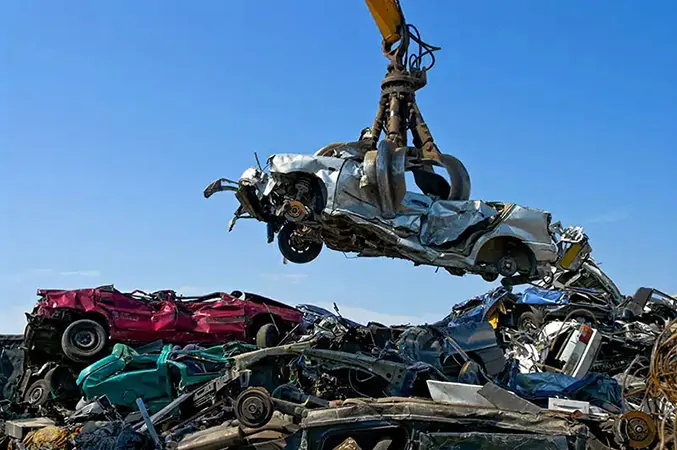
As the recycling industry continues to grow, more and more end-of-life vehicles (ELVs) are entering the recycling stream. For scrap yards and recyclers, every extra minute spent handling ELVs can mean higher operating costs and lower profitability.
A car shredder is a powerful machine used in recycling facilities to break down end-of-life vehicles into smaller pieces, making metal recovery faster and more efficient. In many modern plants, it’s basically the machine that determines overall productivity and profitability.
In the following sections, we’ll walk through the shredding process step by step and explain how the right machine can improve recovery and efficiency.
What Is a Car Shredder?
A car shredder is a heavy-duty machine used to break down end-of-life vehicles and large automotive parts into smaller pieces. You’ll usually find it in scrap yards, recycling plants, and ELV dismantling facilities, where it handles the bulk of automotive waste processing.
There are two main types used in car recycling: two-shaft shredders and hammer mill shredders. Twin-shaft shredders use low-speed, high-torque cutting for primary size reduction of bulky materials. Hammer mill shredders rely on high-speed impact for finer processing and better material separation.
How Does a Car Shredder Work?
Twin-Shaft Shredder
Twin-shaft shredders, such as 500kW Hydraulic Twin Shaft Car Shredder Machine, are typically used for the primary shredding of scrap vehicles. Car bodies or pre-processed hulks are fed into the machine by grab cranes or conveyors, after hazardous components like batteries and fuel have been removed.
Inside the shredding chamber, two counter-rotating shafts equipped with heavy-duty blades begin to tear and shear the material. Thanks to the low-speed, high-torque design (usually 250kW per shaft), the machine can handle steel panels, frames, and reinforced structures with ease.
Instead of producing fine material, the twin-shaft shredder breaks vehicles down into manageable chunks (around 5–20 cm), making them suitable for further processing. The shredded output is discharged via conveyor, with basic magnetic separation sometimes applied at this stage.
Typical throughput is around 15–20 tons per hour for car shells, depending on feed conditions.
Hammer Mill Shredder
Hammer mill shredders, like 560kW Hammer Mill Scrap Car Shredder, are used in the secondary stage to further reduce material size and improve metal liberation. Pre-shredded scrap is fed into the chamber via conveyor.
A high-speed rotor (around 800–1200 RPM) drives multiple hammers that strike the material against breaker plates. This process not only reduces size but also helps separate metals from paint, plastics, and other attachments.
After shredding, the material passes through a series of downstream separation systems, including magnetic separation for steel recovery, eddy current systems for non-ferrous metals, and air classification to remove light materials.
The output is typically divided into three main streams: ferrous metals, non-ferrous metals, and automotive shredder residue (ASR). Processing capacity can reach 20–35 tons per hour, depending on the input material.
How to choose the right car shredder
Twin-shaft shredders are ideal for primary shredding, while hammer mill shredders are better for finer size reduction and material separation. In larger plants, the two are often used together to improve recovery and output quality.
When selecting a machine, recyclers should consider capacity, power, wear resistance, and overall line compatibility.
Conclusion
Car shredding is the key step that turns end-of-life vehicles into valuable recyclable material. The right shredder not only improves recovery, but also helps reduce operating costs and keep the whole line running more efficiently. That’s why choosing the right machine matters so much.
At ENERPAT, we offer both hydraulic twin-shaft car shredders and hammer mill scrap car shredders for different recycling needs. Whether you need primary shredding, finer processing, or a complete Car Recycling and Sorting Line, the right setup can make a real difference in daily operations.
FAQs
Q: Can I feed a whole car with the engine still in it?
A: Remove the battery, fuel tank, and fluids first. Engine block is fine for a twin-shaft shredder.
Q: What materials can a car shredder process?
A: A car shredder can handle complete vehicles, car bodies, aluminum parts, and mixed ferrous or non-ferrous metal scrap. After removing hazardous components, it can also process loose steel and lightweight scrap.
Q: How much power does a typical car shredder need?
A: Industrial car shredders usually range from 400 to 600 kW or more. For example, ENERPAT’s 500kW and 560kW models are built for heavy-duty automotive recycling.
Q: How much can a car shredder process per hour?
A: Depending on the model and material type, output can range from 15–20 tons per hour for car shells, up to 35 tons per hour for lighter scrap like aluminum.
Q: What affects the output of a car shredder?
A: Output depends on material type, feed size, machine model, motor power, and whether the shredder is used alone or as part of a full line.
Q: Do I need both a twin-shaft and a hammer mill?
A: For maximum metal recovery and clean output, yes. For smaller operations, a twin-shaft alone may be enough if you don't need fine shreds.
Q: Is a complete recycling line better than a single machine?
A: For higher volumes and more complex material streams, a complete line usually offers better performance, automation, and overall recovery results.
Enerpat is a global company specializing in waste-recycling and disposal solutions, with a mission to help customers build a better, more sustainable world. We are a leading global provider for municipal and industrial clients, helping them recycle and dispose of waste, reduce costs and consumption, and create more value.
We focus on sorters, shredders, balers, shears, and disposal equipment for a wide range of recycling needs. Enerpat believes that “Quality Transform The World.” We deliver the industry’s highest levels of quality and service. Choosing Enerpat means choosing trust and value.
 English