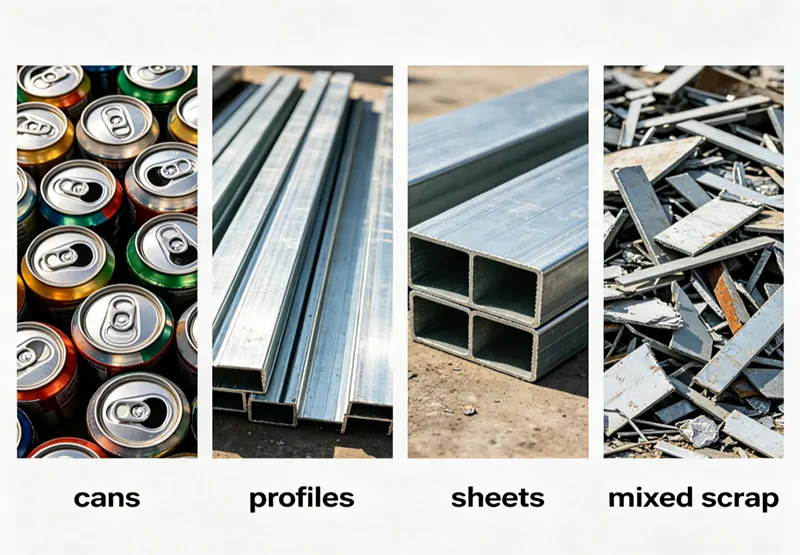
Aluminum scrap comes in many forms, from cans and profiles to sheets and mixed materials. For efficient processing, many recyclers turn to aluminum balers and aluminum shredders. Both machines help improve recycling efficiency, but they serve different purposes in the production line. This guide explains the differences in a practical way so you can choose the right equipment for your operation.
What Is an Aluminum Baler?
An aluminum baler, also know as aluminum compactor machine, is a machine that compresses loose aluminum scrap into compact bales. Instead of cutting or shredding the material, it uses strong hydraulic pressure to reduce its volume. This creates dense, uniform blocks that are easier to store, move, and load for transport.
Key benefits of an aluminum baler include reduced transport costs, better storage efficiency, lower handling and logistics costs, simple operation, and suitability for primary or front‑end processing. For many recycling yards, a baler is the first step after scrap collection.
What Is an Aluminum Shredder?
An aluminum shredder machine is built to break aluminum scrap into small pieces with high‑speed rotating blades or hammers. Unlike baling, its job is to turn loose scrap into a more uniform fraction for sorting, melting, or refining. The shredded output can then be separated into cleaner aluminum and removed contaminants through downstream systems.
Main features of analuminum recycling shredderinclude improved material preparation, better impurity removal, suitability for large‑scale recycling plants, and support for higher‑value aluminum production. In larger facilities, a shredder is often used when maximizing scrap value and recovery is the main goal.
Key Differences Between Aluminum Balers and Aluminum Shredders
At the core of the choice is what you want to achieve with your aluminum scrap: move it efficiently or process it more deeply. This section dives into the main differences, focusing on real‑world operating impact.
1. Processing Method
An aluminum baler compresses scrap using hydraulic pressure, turning loose material into dense blocks. An aluminum shredder, on the other hand, uses rotating blades or hammers to cut and tear the material into smaller pieces.
In practice, baling keeps the original scrap shape mostly intact, while shredding fundamentally changes the particle size and structure, which affects every step after it.
2. Output Material and Density
Baler output consists of tightly packed bales that are easy to stack, store, and transport, with stable density and clean edges. Shredder output is loose, uniform fragments with a more irregular shape but consistent size range, which improves flow through sorting lines and into melting furnaces.
From a practical point of view, bales are easier to count, stack, and handle with standard forklifts, while shredded scrap often needs bulk handling.
3. Equipment Investment and Operating Cost
An aluminum baler usually comes with a lower initial investment and relatively simple running costs. An aluminum shredder requires a higher investment due to its more complex structure, plus higher energy and maintenance requirements.
For many recyclers, the baler is a “first‑step” investment, while the shredder is treated as a long‑term asset where payback is measured in throughput and scrap value uplift.
4. Operation and Maintenance
An aluminum baler is straightforward to operate, usually needing minimal training, and maintenance is focused on hydraulic systems, lubrication, and general mechanical checks. An aluminum shredder requires more skilled operators, with regular inspections of blades, hammers, bearings, and drive components, as well as more frequent wear‑part changes and safety checks.
This means shredder‑based lines often need more staff time and technical support, while baler‑only operations can run with a smaller team and less technical oversight.
5. Recycling Efficiency and Metal Recovery
An aluminum baler mainly improves handling, storage, and transport efficiency without changing the material composition or purity. An aluminum shredder helps remove impurities such as plastics, coatings, rubber, or dirt by breaking the scrap into smaller pieces, which makes separation systems work more effectively.
With shredding, recyclers can often push the final aluminum output to a higher purity grade, which commands better pricing with buyers or smelters. In contrast, a baler mainly keeps the scrap organized and easier to move, but not cleaner.
6. Summary Table
Criterion
Aluminum Baler
Aluminum Shredder
Processing method
Compression
Shredding
Output
Compact bales
Small shredded pieces
Cost
Lower
Higher
Operation
Simple
Complex
Recycling efficiency
Basic
Advanced
When to Choose an Aluminum Baler vs. an Aluminum Shredder
In real recycling operations, the choice between a baler and a shredder often depends on what you do with the scrap. Some recyclers only need to move and store material efficiently, while others want to boost its value through processing.
Best Scenarios for an Aluminum Baler
If your main task is collecting and transporting aluminum scrap, a baler is usually the more practical choice. Loose cans, thin sheets, and light profiles can quickly pile up and dominate the yard. Compressing them into bales keeps the space under control and reduces transport costs.
It also suits operations with limited budgets or tight space. The machine is simpler, easier to run, and doesn’t require complicated setup. For many recyclers, a baler is the first piece of equipment they invest in.
When an Aluminum Shredder Makes More Sense
A shredder becomes more important when the goal shifts from moving scrap to getting more value from it. If you handle mixed materials, coated scrap, or larger pieces, reducing everything to a consistent size makes the next steps much smoother.
In larger plants, shredders are often part of a full line that includes sorting and sometimes melting. With better‑prepared material, separation runs more efficiently, and the final aluminum output is cleaner and more valuable.
For operations that plan to scale up or move deeper into processing, a shredder is usually the next step after basic baling.
Can They Work Together?
In practice, aluminum balers and shredders are not always used as interchangeable options—but they can complement each other when configured correctly.
In most integrated recycling lines, a shredder is placed at the front end. Loose and irregular aluminum scrap is first reduced to a more uniform size, making it easier to handle and preventing feeding issues. The processed material is then conveyed to a baler, where it is compacted into dense, transport-friendly bales. This setup improves feeding efficiency, avoids blockages, and ensures stable operation across the system.
However, it’s important to understand that balers and shredders often serve different roles in the recycling value chain.
Many recyclers use balers as a standalone solution. Their focus is on collecting, compacting, and selling aluminum scrap in bale form to downstream buyers. In this model, the goal is to reduce volume, simplify logistics, and generate quick turnover.
Shredders, on the other hand, are more commonly used by operations that process material further. This includes recyclers and metal processors who aim to liberate, sort, or refine aluminum scrap into higher-purity fractions. The output can then be directly used in manufacturing or sold as higher-value secondary raw material.
Because of this, “baling first, then shredding” is typically not a single workflow, but rather a handoff between two different businesses within the recycling chain.
In larger and more advanced setups, both machines may appear in the same system—but the sequence is usually shredding followed by baling, not the other way around. This approach ensures smoother material flow, better equipment performance, and higher overall processing efficiency.
A: It depends on material type, size, and processing goals. Different setups require baling, shredding, or a combination of both.
Q: Can an aluminum baler handle mixed metal scrap?
A: Most aluminum balers work best with mostly aluminum; mixing steel too much reduces bale quality and can increase wear. Separate metals if possible.
Q: Can shredded aluminum be baled for transport?
A: Yes. Baling shredded aluminum reduces dust and volume, and can make long‑haul transport easier.
Q: Are there environmental regulations that favor using an aluminum shredder over simple baling?
A: Some regions encourage size reduction and better separation to reduce landfill and improve recycling rates, which makes shredding more attractive for mixed or contaminated scrap.
Q: Can an aluminum shredder process coated or painted scrap?
A: Yes, but coatings and paint create dust and residues; combine shredding with dust control and residue treatment.
Q: Can an aluminum baler run continuously with conveyors?
A: Many balers are batch‑style, but they can be integrated into a semi‑continuous line with feeding and bale removal.
Q: How does scrap size uniformity from a shredder affect sorting‑line efficiency?
A: More uniform size improves sensor response, magnet and eddy‑current separation, and reduces material bouncing or jamming, leading to better sorting accuracy and throughput.
Q: How do very thick pieces affect shredder blade life?
A: Thick or large pieces overload the machine and shorten blade life; pre‑cutting or using a heavy‑duty shredder helps.
Q: Can small recyclers start with a baler and add a shredder later?
A: Yes. Many system providers design modular lines so you can start with a baler and add shredder and sorting later as volume grows.
Final Thought
Aluminum balers and shredders serve different purposes, but they work best when used together. The right choice depends on your process, budget, and long‑term goals. At ENERPAT, we help recyclers find practical solutions that improve efficiency and get more value out of their aluminum scrap.
Enerpat is a global company specializing in waste-recycling and disposal solutions, with a mission to help customers build a better, more sustainable world. We are a leading global provider for municipal and industrial clients, helping them recycle and dispose of waste, reduce costs and consumption, and create more value.
We focus on sorters, shredders, balers, shears, and disposal equipment for a wide range of recycling needs. Enerpat believes that “Quality Transform The World.” We deliver the industry’s highest levels of quality and service. Choosing Enerpat means choosing trust and value.
 English