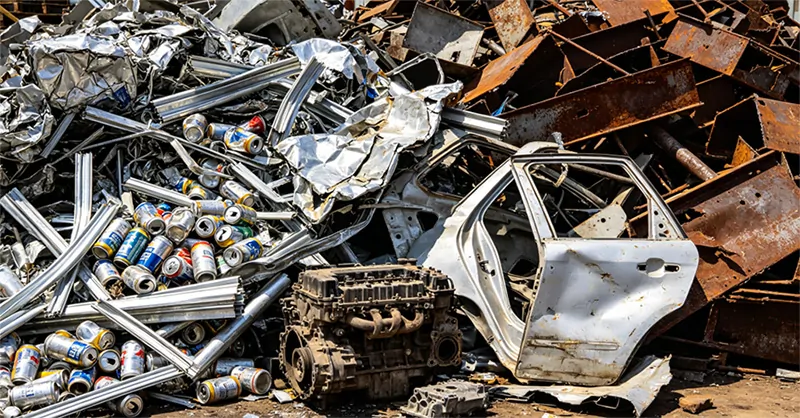
Aluminum shows up everywhere—construction sites, scrapyards, even in everyday trash like beverage cans. From a recycler’s perspective, one thing quickly becomes clear: not all aluminum scrap is the same. Some is clean and easy to handle, while some is messy, mixed, and costly to process. Understanding these differences is the first step to getting better value out of aluminum recycling.
This guide will help you understand the main types of aluminum scrap and why proper classification matters for recycling value.
Why Scrap Classification Really Matters
In everyday recycling operations, aluminum isn’t just aluminum. The way it’s classified can have a direct impact on how much it’s worth and how easy it is to process later. Clean, well‑separated scrap usually goes straight into the furnace with fewer issues, while mixed or heavily contaminated material often needs extra steps and extra handling.
Those differences show up in several key areas. Pricing can vary quite a bit depending on how clean and consistent the scrap is. Melting performance also changes; mixed materials may slow down the process or create quality issues in the final product. And of course, the more handling and preprocessing required, the higher the overall cost.
For most recyclers, getting the classification right isn’t just about keeping things organized. It’s about improving recovery, reducing rework, and making the whole operation run more smoothly.
Types of Aluminum Scrap
1. Post-Consumer Aluminum Scrap
This is the kind of aluminum most people recognize, materials that have already been used and then thrown away. Think of beverage cans, old window frames, or parts from end-of-life vehicles. It’s common, widely available, and makes up a big share of what ends up in scrapyards every day.
The problem is that it rarely comes in clean. It often carries paint, dirt, plastic fittings, or even small pieces of steel. That makes it harder to handle in a consistent way and usually requires more preparation before it’s ready for recycling.
In many recycling operations, this type of scrap is first compressed into bales using an aluminum baler to reduce volume and make transport easier. When it’s significantly mixed, it may also go through an aluminum shredder machine and sorting system to remove unwanted materials and improve consistency before it’s fed into the furnace. In more advanced setups, this process can be integrated into a complete Aluminum Recycling Linefor higher efficiency and better material recovery.
2. Post-Industrial Aluminum Scrap
This type of scrap comes straight out of manufacturing, so it’s very different from the kind you see in post-consumer streams. It usually includes offcuts from aluminum sheets, machining turnings, or stamping waste from production lines. Because it hasn’t been exposed to the same level of dirt and contamination, it’s generally easier to handle.
That often leads to more consistent composition and shape. For recyclers, this means fewer surprises during melting and more predictable results, which usually translates into better value.
When it comes to handling, fine chips and turnings are typically compressed into briquettes. This helps recover residual coolant and makes storage and transport much more manageable. Larger, cleaner pieces like sheet offcuts are usually baled to keep the material organized and easier to feed into the next stage of processing.
3. Mixed Aluminum Scrap from Recycling Yards
In real-world recycling, scrap rarely shows up neatly sorted. A lot of it comes from dismantled cars, old appliances, or demolition sites, and it’s usually a mix of different materials all tangled together. Aluminum can be stuck to steel, plastics, rubber, or even glass, which makes it hard to handle as a single stream.
This kind of scrap is often bulky and irregular, so sending it straight to the furnace is not practical. It needs to be broken down and cleaned up before it can be processed efficiently.
That’s where size reduction and separation come in. The material is usually shredded first to make it more manageable and to loosen any attached components. After shredding, sorting systems help separate aluminum from other metals and non‑metal materials. Once the aluminum fraction is recovered, it can be compacted or baled, depending on its form, to prepare it for the next stage of recycling.
4. Cast Aluminum vs. Wrought Aluminum
Not all aluminum scrap behaves the same way, even if it looks similar at first glance. In recycling, it’s common to keep cast aluminum and wrought aluminum separate, because they respond differently during processing.
Cast aluminum is usually found in parts like engine blocks or wheels. It’s made by pouring molten metal into molds, so it tends to be thicker and more rigid. Wrought aluminum, on the other hand, comes from rolling or extrusion, think sheets, plates, and profiles.
These two types don’t melt exactly the same way, and mixing them without control can affect the quality of the final product. For that reason, recyclers usually try to keep them apart when possible.
In cleaner, more defined streams, both types can be baled or compacted and sent directly to the furnace. But in mixed scrap, they’re often processed through an aluminium recycling shredder and sorting system first, so each type can be recovered more clearly before remelting.
A: It depends on scrap type, size, and contamination level. Power, cutting design, and output requirements should match your processing goals.
Q: How do you identify aluminum scrap quickly in a mixed pile?
A: Visual inspection helps, but tools like handheld analyzers or sorting systems are often needed for accurate identification.
Q: Which type of aluminum scrap is the most profitable to recycle?
A: Generally, clean and sorted post-industrial scrap has higher value because it requires less processing and delivers more consistent melting results.
Q: Is it worth separating aluminum scrap manually?
A: For small volumes, maybe. For larger operations, mechanical processing is usually more efficient and consistent.
Q: How do contaminants affect aluminum recycling?
A: Contaminants like oil, paint, plastic, or rubber can cause defects during melting, increase emissions, and require additional treatment steps.
Q: Does aluminum scrap lose quality after multiple recycling cycles?
A: Aluminum itself can be recycled repeatedly, but contamination and mixing with other alloys can affect final material properties.
Q: Can aluminum scrap with oil or coolant be recycled directly?
A: It can be recycled, but excess oil or coolant needs to be removed or reduced first, otherwise it may affect melting efficiency and environmental compliance.
Q: Are there environmental regulations for handling aluminum scrap?
A: Yes, especially for scrap containing oils or coatings. Regulations often require proper storage, fluid control, and emission management during processing.
Q: What is the typical recovery rate for aluminum recycling?
A: Recovery rates vary, but well-sorted and properly processed aluminum scrap can achieve very high recovery, often above 90%.
Final Thoughts
Aluminum scrap may look similar at first glance, but the way it’s handled makes a significant difference. From classification to processing, each step affects efficiency, cost, and final value.
Choosing the right approach, and the right equipment, can make aluminum recycling far more effective and profitable. For many recyclers, working with experienced equipment providers like ENERPAT is often the key to turning complex scrap into consistent returns.
Enerpat is a global company specializing in waste-recycling and disposal solutions, with a mission to help customers build a better, more sustainable world. We are a leading global provider for municipal and industrial clients, helping them recycle and dispose of waste, reduce costs and consumption, and create more value.
We focus on sorters, shredders, balers, shears, and disposal equipment for a wide range of recycling needs. Enerpat believes that “Quality Transform The World.” We deliver the industry’s highest levels of quality and service. Choosing Enerpat means choosing trust and value.
 English