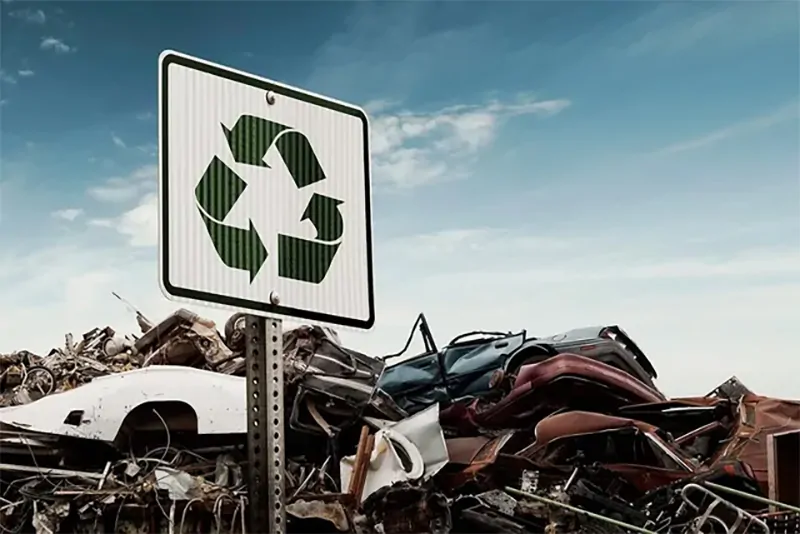
A few years ago, aluminum was a much smaller part of most cars. Now it shows up in a lot more places, and that changes how recyclers handle each vehicle. It affects how you process cars, how you separate materials, and how much money you can get back.
In the next section, we’ll look at how much aluminum there is in a car and why that matters in the scrapyard.
How Much Aluminum Is in an Average Car?
Most modern vehicles contain around 150 to 250 kg of aluminum, roughly 8% to 12% of total weight. Steel is still the main material, but this portion is already big enough to affect what you actually recover.
Aluminum Content Depends on Car Model
The number changes a lot depending on the vehicle. Older small cars usually sit at the bottom of the range. Newer models are the opposite, SUVs, pickups and especially electric vehicles are much higher. They carry more aluminum, it is not uncommon for the total weight to exceed 200 kg.
Vehicle type makes a big difference. Sedans and hatchbacks typically use aluminum alloys with a lower aluminum content, while SUVs, pickups and luxury models tend to use a higer proportion of aluminum alloys to achieve weight reduction. EVs go even higher in this regard, mainly because they need to offset battery weight.
The Year of the Car Affects the Aluminum Content
Age also makes a noticeable difference, and most yards can tell just by looking at what comes in. Cars built before 2010 didn’t have much aluminum and under 100 kg was very typical. Between 2010 and 2020, as weight reduction became increasingly important, this figure began to rise. In today’s new cars, particularly models produced after 2020, it is no longer unusual for the aluminum content to reach 200 kg or more.
Why this shift changes everything for yards
This is where it starts to matter. Although aluminum may still account for a relatively small proportion by weight, it often carries a higher value. Therefore, whilst the percentage doesn’t look huge on paper, the actual impact is very real. If you fail to recycle aluminum properly, you are effectively letting profits slip through your fingers without even realising it.
Where Is Aluminum Found in a Car?
Aluminum is not confined to any specific part of the vehicle, but is found throughout, and shows up in completely different forms. From thick castings to thin panels and mixed assemblies...
1. Engine and Powertrain Components
This is where most of the heavy aluminum components are concentrated. The engine block, cylinder head and gearbox housing, these are typically cast aluminum parts and are quite heavy. The problem is that they are never clean. They are bolted onto steel components, wrapped in gaskets, and covered in attachments. Although they look like aluminum parts, it takes quite a bit of effort to clean them thoroughly.
2. Body Panels and Structure
This is where things have changed the most in recent years. Hoods, doors, trunk lids are increasingly being manufactured from aluminum. Some models have gone even further, adopting body structures that make extensive use of aluminum. The material used here is much thinner. Once it goes through shredding in an aluminium recycling machine, it behaves very differently from cast parts and breaks apart much more easily.
3. Wheels and Suspension Parts
Alloy wheels are the most obvious components. Most yard remove these parts separately, as they are relatively clean and easy to sell. Other parts like control arms and brackets also contain aluminum, but they’re usually mixed with rubber and steel, which makes them more diffcult to process.
4. Heat Exchangers and Other Parts
Radiators and AC units may not look like much on their own, but they add up over volume. They are often mixed in with copper, plastic and wiring, which makes them difficult to process. However, if you handle a sufficient number of vehicles, this part is worth paying attention to.
Ultimately, aluminium rarely exists in its pure form. It is always bound to other substances, contaminated or mixed with other materials. This is why simply dismantling it yields very little result.
How to Recover Aluminum from Scrap Cars Efficiently
It is one thing to know that a car contains between 150 and 250 kilograms of aluminium, but it is quite another to extract it and process it into a marketable form. In most recycling yards, recycling is not a single, simple step, but a complete chain of processes.
1. Pre-processing
It usually starts with some basic prep. Drain fluids, remove batteries, and pull off easy parts like wheels or engines if it makes sense. This does not mean completely dismantling the car, it simply involves removing those parts that are clearly going to hinder subsequent operations. If this step is skipped, all subsequent work will become much more difficult to carry out.
2. Shredding
After that, cars go through an aluminum shredder. The goal here isn’t just size reduction, it’s to break things apart so different materials can separate later. If the shredding process is carried out correctly, the aluminium will be separated from the steel, plastic and other components.
3. Separation Systems
The shredded material enters the separation stage. Steel is usually taken out first with magnets. Then an eddy current system pulls out aluminum and other non-ferrous metals from the remaining mix.
4. Densification
Recycled aluminum remains lightweight, yet it takes up a great deal of space. This leads to inefficiencies in storage and transport. Using an Aluminium Scrap Baling Machine to compress it into dense bales is very crucial. Not only does this make it easier to handle and reduce transport costs, but it is also generally preferred by buyers.
No single machine can do everything on its own. Pre-processing, shredding, separation, and densification must align through a turnkey aluminum recycling line. When these stages work together smoothly, those 150-200 kg of raw material can be transformed into real value.
FAQs
Q: How can I estimate the aluminum content of a specific car model?
A: The easiest way is by looking at the vehicle type, year, and brand. Newer SUVs, EVs, and premium models typically contain significantly more aluminum than older or economy cars.
Q: Is there a growing demand for recycled aluminum?
A: Yes, and it’s been pretty steady. Recycled aluminum takes far less energy to produce than primary metal, so more buyers are actively looking for it, especially in automotive and manufacturing.
Q: How does aluminum content affect scrap car prices?
A: Vehicles with higher aluminum content can offer better returns, especially if the aluminum is properly separated and sold as clean scrap.
Q: Are older cars worth processing for aluminum recovery?
A: Yes, but keep expectations realistic. Older cars usually don’t have much aluminum, so most of the value still comes from steel rather than non-ferrous metals.
Q: Does aluminum lose quality after recycling?
A: No, aluminum can be recycled repeatedly without losing its core properties, which is why it’s highly valuable in the recycling industry.
Q: How much aluminum is typically lost during processing?
A: It depends a lot on how the material is handled. Poor shredding or separation can leave a fair amount behind, especially when aluminum is still attached to other materials.
Q: How does aluminum density affect handling and transport?
A: Aluminum is lightweight but bulky, which can increase storage space requirements and transportation costs if not compacted.
Q: How does aluminum affect vehicle weight overall?
A: Aluminum is significantly lighter than steel, which helps reduce vehicle weight and improve fuel efficiency or battery performance.
A: It depends on your material type and processing goal. If you handle aluminum chips or swarf from machining, a briquetter or chip compactor is ideal to reduce volume and recover cutting fluids. For mixed or bulky scrap aluminum, shredders, separators, and sorting systems are more suitable. You should also consider processing capacity, automation level, and whether you want to maximize melting efficiency or transportation savings.
Final Thoughts
Aluminum is no longer a minor component in modern vehicles, it has become a valuable and growing material stream for recyclers. While understanding how much aluminum is in a car is important, the real value depends on how efficiently it can be recovered and processed. At ENERPAT, the focus is on helping recyclers turn that potential into actual returns by improving how aluminum is processed and handled.
Enerpat is a global company specializing in waste-recycling and disposal solutions, with a mission to help customers build a better, more sustainable world. We are a leading global provider for municipal and industrial clients, helping them recycle and dispose of waste, reduce costs and consumption, and create more value.
We focus on sorters, shredders, balers, shears, and disposal equipment for a wide range of recycling needs. Enerpat believes that “Quality Transform The World.” We deliver the industry’s highest levels of quality and service. Choosing Enerpat means choosing trust and value.
 English