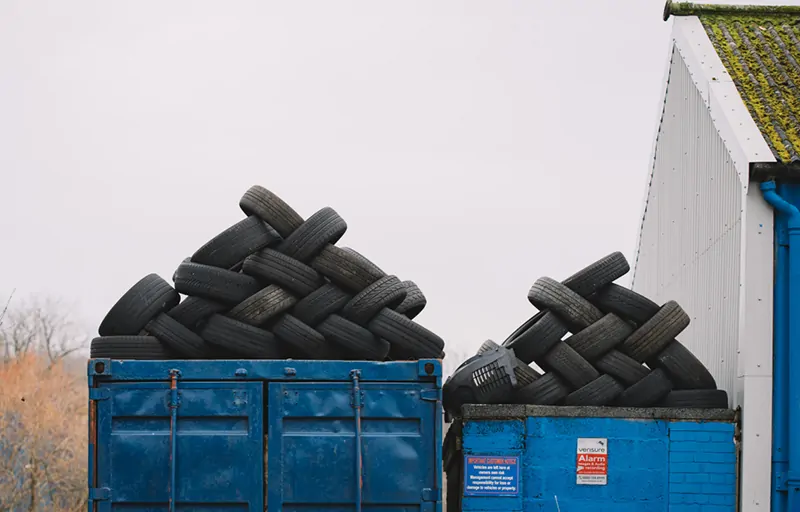
Waste tires have become a serious environmental challenge worldwide because they take up large amount of space that are difficult to decompose, and can create long-term disposal risks. Tire shredding offers a practical way to turn this waste into reusable materials, while efficient recycling depends on the right processing equipment.
The next sections explain how tire shredding works and how it can benefit your operation.
What Is Tire Shredding?
Tire shredding is the process of breaking waste tires into smaller pieces so you can be handle, transport, and process them more efficiently. It is a crucial step in tire recycling because whole tires are bulky, difficult to store, and hard to reuse in their original form.
Depending on your recycling objectives, the process may involve different levels of size reduction, from rough tire chips to finer rubber material. Passenger tires, truck tires, and OTR tires can all be recycled, but their different sizes, construction, and steel content mean they require different processing methods.
Why Waste Tires Need to Be Recycled
Waste tires need to be recycled for both environmental and economic reasons. When you leave them in piles or send them to landfills, they take up valuable space, create fire hazards, and can become a source of pollution over time. Reusing them through recycling helps you to reduce these risks and supports cleaner waste management.
At the same time, tires still contain useful materials such as rubber, steel, and fiber. Instead of treating them as useless waste, recycling allows these materials to be recovered and turned into new products. This makes your waste tire recycling a practical way to protect the environment while creating real resource value.
The Tire Shredding Process
1. Collection and Sorting
The tire shredding process starts with collecting waste tires from different sources and sorting them by type and condition. This step is important because different tires may need different handling before they enter the recycling line. Proper sorting helps improve processing efficiency and makes the whole system run more smoothly.
For your business, good sorting means less downtime, smoother feeding, and better overall processing efficiency. It also helps reduce unnecessary wear on the shredder because the machine is handling more consistent material. In mant recycling operations, this is the first step that determines how efficient the whole line will be.
2. Primary Shredding
Once sorted, the tires can be fed into a Double Shaft Tire Recycling Shredder for primary shredding. In this stage, large tires are broken down into smaller pieces, which reduces their volume and makes them easier to transport and process. This step is especially useful for preparing tough tire material for the next stages of recycling.
From a business point of view, primary shredding helps reduce storage space, lower transportation costs, and prepare the material for the next processing stages. It also makes handling easier for your operation, especially if you are dealing with large quantities of waste tires every day. A stable primary shredder can improve the efficiency of the whole recycling system.
3. Steel Separation
After primary shredding, the material moves to a Tire Steel Wire Separator. This machine removes the embedded steel wire from the rubber, helping recover valuable metal while improving the cleanliness of the recycled rubber output. Steel separation is an important step because it increases the purity of your final recycled material.
Steel separation creates an additional recovery stream instead of letting the metal go to waste. The recovered steel can be sent back into metal recycling markets, while the rubber becomes cleaner and more suitable for the next processing stage. This improves both the quality of your output and the potential return from the whole recycling process.
4. Secondary Processing
The shredded tire pieces are then sent to a Tyre Granulator Machine for further size reduction. This stage produces smaller rubber granules that can be used in a wide range of recycling applications. By reducing the material into finer pieces, the granulation process adds more value to the final product.
This step is where the material begins to move from basic waste reduction to value-added production. Smaller and more consistent granules can be sold into industries such as playground surfaces, sports flooring, asphalt modification, and rubber products. In other words, the finer the material becomes, the more commercial possibilities it can create for your business.
5. Final Material Recovery
At the end of the process, the recycling line produces reusable materials such as rubber, steel, and fiber. These materials can be used in different industrial applications depending on their quality and size. In this way, tire shredding helps turn waste tires into useful resources instead of disposal problems.
Valuable Resources Made from Waste Tires
You can turn waste tires into several useful materials after shredding and processing. One of the most common products is rubber mulch, which is often used in landscaping and playgrounds because it is durable and easy to maintain. Another important product is rubber crumb, which you can use it in sports surfaces, flooring, and asphalt modification.
Recovered steel is also an important output of the tire recycling process. Once separated from the rubber, you can send it back into metal recycling streams and used again in manufacturing. In some cases, the remaining fiber or other lightweight material may also be used in industrial applications, depending on local requirements and recycling conditions.
This is what makes tire shredding more than just a disposal method. It gives your waste tires a second life and turns them into materials that still have real market value.
FAQs
Q: What size are tire chips after shredding?
A: The final size depends on the machine setup and application requirements. Some operations need rough tire chips, while others require fine rubber granules.
Q: Are old tires difficult to recycle?
A: Older tires can still be processed effectively in most cases. However, heavily damaged or contaminated tires may require additional sorting.
Q: What industries use recycled tire materials?
A: Recycled tire materials are widely used in construction, road paving, sports surfaces, and fuel applications. Demand continues to grow as sustainability standards increase.
Q: Is tire shredding suitable for small recycling businesses?
A: Yes, many recycling lines can be configured for smaller operations. Equipment capacity can be adjusted according to processing needs and budget.
Q: What factors affect tire shredding efficiency?
A: Tire size, feed consistency, blade condition, and machine configuration all influence processing efficiency. Proper system design helps maintain stable output.
Final Thoughts
In the end, tire shredding offers a practical solution to waste tire disposal while supporting both environmental protection and material recovery. With the right recycling system, waste tires can be turned into valuable resources, and ENERPAT helps make that transformation possible.
Enerpat is a global company specializing in waste-recycling and disposal solutions, with a mission to help customers build a better, more sustainable world. We are a leading global provider for municipal and industrial clients, helping them recycle and dispose of waste, reduce costs and consumption, and create more value.
We focus on sorters, shredders, balers, shears, and disposal equipment for a wide range of recycling needs. Enerpat believes that “Quality Transform The World.” We deliver the industry’s highest levels of quality and service. Choosing Enerpat means choosing trust and value.
 English