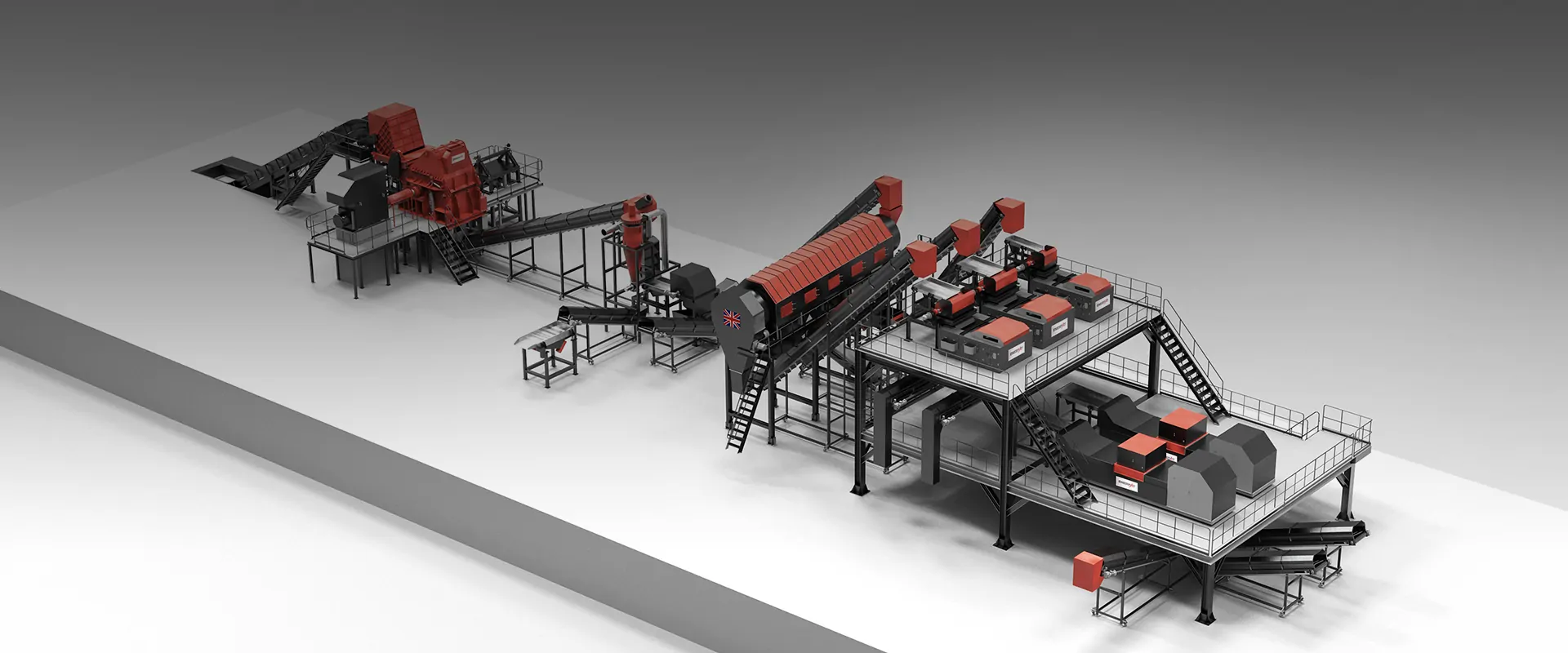
The ENERPAT Aluminium Recycling Plant is specifically engineered to process aluminum thermal break scrap—such as doors and window frames—into high-purity recyclable materials. This advanced aluminium recycling line combines powerful shredding, multi-stage screening, and precision separation technologies, including X-ray sorting, eddy current separation, Z-type air classification, and magnetic drum separation.
Together, these systems deliver an aluminum recovery rate exceeding 98%, while also efficiently recovering plastics, copper, and zinc at rates ranging from 30% to 95%.
Built with a modular and scalable design, the Aluminium Recycling Plant can be flexibly configured to match your material composition, capacity requirements, and investment budget. An integrated dust collection system effectively controls emissions throughout the process, ensuring a cleaner and safer working environment.
With a stable throughput of 10–15 tons per hour, this aluminium recycling line helps reduce landfill waste, improve material value, and meet strict environmental regulations. It is a reliable turnkey solution for recyclers and manufacturers aiming for high-efficiency, low-emission aluminum recovery.
10–15 t/h Aluminium Recycling Line
See a Real Customer Installation in Operation
This is a working ENERPAT aluminium recycling plant installed at a customer’s site—no simulations, no staged demos. Watch how discarded aluminium doors and window frames are processed into high-purity recyclable materials in real time. From primary shredding to advanced separation, every stage is designed to deliver consistent performance—achieving over 98% aluminium recovery with a stable output of 10–15 tons per hour. What you see is what you get: a proven system built for reliability, efficiency, and measurable returns. Take a closer look—and consider what this level of performance could mean for your operation.
Core Advantages
Built Around Your Operation, Not the Other Way Around
High-Purity Aluminium Recovery, More Value from Every Stream Recover over 98% of aluminium from thermal break scrap such as doors and window frames. At the same time, extract 30–95% of plastics, copper, and zinc—turning mixed waste into multiple, profitable material streams instead of a single low-value output.
Modular Design That Scales with You Avoid heavy upfront investment. Start with a standalone shredder or a basic separation setup, then expand as your business grows. Add X-ray sorting, eddy current separators, or a full dust collection system when you need it—building your aluminium recycling line step by step, on your terms.
Advanced Sorting for Maximum Precision A fully integrated combination of Z-type air separation, magnetic drum separation, eddy current technology, and X-ray sorting ensures highly accurate material separation. Ferrous metals, non-ferrous metals, and non-metal fractions are cleanly divided—delivering higher purity and better resale value.
Cleaner Process, Safer Workplace An integrated dust collection system captures airborne particles generated during shredding and screening. This not only protects your operators, but also helps you meet environmental and workplace safety standards—without sacrificing throughput or efficiency.
Sort. Separate. Recover.
Your Turnkey Aluminum Recycling Plant – From Feed to Final Product
Core Equipment
Hammer Mill Shredder
Breaks down aluminum thermal break scrap into uniform chips through high-impact crushing and rolling action. This process also helps remove surface contaminants, ensuring the material is properly prepared for downstream separation.
Z-Type Separator
Uses controlled airflow to separate light fractions (such as plastics) from heavier metals including aluminum, copper, and zinc—creating ideal conditions for further metal separation.
Vibrating Table
Distributes material evenly across the full width using controlled vibration. This ensures a consistent feed rate, improving both the accuracy and efficiency of subsequent sorting equipment.
Magnetic Drum Separator
Removes ferrous contaminants like iron and steel using a high-strength magnetic field, significantly improving the purity of non-ferrous metal outputs.
Drum Screen
Separates shredded material into defined size fractions. Accurate sizing allows each downstream process to operate under optimal conditions, improving overall recovery performance.
Eddy Current Separator
Efficiently extracts non-ferrous metals—particularly aluminum—from non-metallic materials, maximizing recovery of valuable metals and reducing loss.
X-Ray Separator
Applies AI-driven density recognition to precisely distinguish aluminum from other materials. Delivers ≥98% aluminum purity while enabling copper recovery rates of over 95%.
Dust Collection System
Captures dust, fumes, and fine particulates generated during shredding and sorting. This helps maintain a cleaner workspace, protects operators, and ensures compliance with environmental standards.
Standalone Aluminum Shredders
Core Shredding Equipment Optimized for Aluminum Materials – Stable, Efficient, and Ready for Independent Operation.
Engineered for large-scale, continuous aluminum shredding, our Horizontal Hammer Mill Shredder uses high-speed rotating hammers to strike, tear, and compress incoming aluminum waste into spherical shapes while simultaneously separating impurities like plastics, rubber, and paint. Powered by a high-torque motor, it delivers uniform output size ideal for downstream sorting and direct remelting.
Designed as the premium solution for bulky and lightweight aluminum scrap, our Hydraulic Single Shaft Shredder utilizes a high-torque hydraulic drive system combined with a robust rotor and precision cutting blades to shear aluminum profiles, window frames, UBC bales, and loose mixed scrap into consistent particle sizes. The automatic hydraulic ram feeding system ensures stable, clog-free operation – even with large-volume or baled materials.
15 t/h standardized design for aluminum thermal break waste, supports stepwise expansion from single shredder to full sorting line, aligning with your budget and growth for optimal ROI.
Door‑to‑Door Installation & Full After‑Sales Support
On‑site commissioning, operator training, and 24/7 technical support. Our service engineers ensure smooth startup and long‑term reliability with routine inspections.
>98% Aluminum Recovery, Verified in Operation
Field‑proven recovery rates exceeding 98% for aluminum, plus 30–95% for plastics, copper and zinc, turning mixed waste into multiple revenue streams.
Four‑Stage Precision Sorting Technology
Sequential Z‑type separator, magnetic drum, eddy current, and X‑ray sorter removes ferrous, non‑ferrous and non‑metals for industry‑leading aluminum purity.
Customer Sites
FAQs
Q1. What types of aluminum scrap can this system process?
A: This aluminium recycling plant is designed primarily for thermal break aluminum scrap, such as doors and window frames with plastic insulation strips. It also handles a wide range of input materials, including:
Aluminum profiles and extrusion scrap
Mixed aluminum scrap
Aluminum bales
UBCs (used beverage cans)
For more complex feedstock like casting alloys or heavily mixed scrap, a simple pre-sorting step is recommended to ensure stable output quality.
Q2. What makes thermal break aluminum difficult to recycle?
A: Thermal break material combines aluminum with plastic insulation, making it difficult to separate using conventional methods. That’s why this aluminium recycling line is engineered as a complete liberation system:
A robust aluminium recycling shreddder breaks down the structure
Crushing and impact stages release bonded materials
Advanced separation equipment isolates metals from non-metals
This ensures efficient separation of aluminum and plastics, even in tightly bonded materials.
Q3. How does the aluminium recycling line separate different materials?
A: The process combines multiple technologies within one integrated aluminium recycling line:
Size reduction using an aluminum shredder machine
Air classification for light and heavy separation
Magnetic separation for ferrous removal
Eddy current separation for non-ferrous metals
Optional X-ray sorting for high-precision recovery
Each stage plays a specific role in ensuring clean and valuable output streams.
Q4. What particle size is best for efficient processing?
A: For optimal performance of the aluminium recycling machinery, material should ideally be processed within:
5–150 mm range, with
10–80 mm as the most efficient window
The aluminium recycling shreddder is designed to produce consistent output sizes suitable for downstream separation and high recovery efficiency.
Q5. Can I start small and expand later?
A: Yes. One of the key advantages of this aluminium recycling plant is its modular structure. You can begin with:
A single aluminum shredder machine for primary size reduction
Then gradually expand your aluminium recycling line by adding:
Eddy current separators
X-ray sorting systems
Dust collection units
This allows you to scale your aluminium recycling machinery investment based on actual business growth.
Q6. What does it take to start an aluminum recycling operation?
A: Starting an aluminium recycling business typically requires more than just equipment. You also need:
Stable scrap supply channels
Proper site layout and space planning
Reliable power supply
Understanding of local environmental requirements
A properly configured aluminium recycling plant can be deployed in phases, reducing entry barriers while maintaining long-term scalability.
Q7. What are the main operating costs?
A: Key operating costs for an aluminium recycling line include:
Electricity consumption
Wear parts from the aluminium recycling shreddder
Labor and maintenance
Routine servicing of aluminium recycling machinery
Well-designed systems focus on durability and energy efficiency to reduce long-term cost per ton.
Q8. How much space is required for installation?
A: A standard 10–15 t/h aluminium recycling plant typically requires a medium-sized industrial workshop. Space is usually allocated for:
Feeding and storage
Shredding and processing zones (including the aluminum shredder machine)
Sorting and separation equipment
Finished material output areas
Layouts can be customized depending on your facility conditions.
Q9. How is dust and environmental compliance handled?
A: The aluminium recycling line includes an integrated dust collection system designed to capture fine particles generated during shredding and separation. This ensures:
Cleaner working conditions
Operator safety
Compliance with environmental regulations
Proper dust control is an essential part of modern aluminium recycling machinery design.
Q10. Do I need permits to operate an aluminium recycling plant?
A: In most regions, yes. Requirements may include air emission permits and environmental compliance approvals. A properly engineered aluminium recycling plant with dust control and stable separation performance can significantly simplify the approval process and help meet local standards.
Q11. What kind of support is provided after installation?
A: Full-service support typically includes:
Installation guidance or on-site commissioning
Operator training
Technical troubleshooting
Long-term maintenance support
This ensures your aluminium recycling line operates reliably from startup through full production.
Q12. How long does it take to achieve ROI?
A: Return on investment depends on scrap prices, operating costs, and recovery efficiency. However, many operators of a well-optimized aluminium recycling plant achieve ROI within 1–3 years, especially when recovering multiple valuable materials instead of only aluminum.
Enerpat is a global company specializing in waste-recycling and disposal solutions, with a mission to help customers build a better, more sustainable world. We are a leading global provider for municipal and industrial clients, helping them recycle and dispose of waste, reduce costs and consumption, and create more value.
We focus on sorters, shredders, balers, shears, and disposal equipment for a wide range of recycling needs. Enerpat believes that “Quality Transform The World.” We deliver the industry’s highest levels of quality and service. Choosing Enerpat means choosing trust and value.