Copper is one of the most valuable and widely recycled metals, with applications ranging from electrical systems to construction and manufacturing. Because it can be recycled repeatedly without losing its key properties, recovering scrap copper helps conserve resources while creating value from discarded materials.
This guide explains you the key stages of copper recycling, common processing methods, and the equipment typically used throughout the process.
How Is Scrap Copper Recycled?
When you handle scrap copper, your main goal is to recover as much clean, usable material as possible while keeping processing costs under control. To do that, you need to move through a series of practical steps, each one preparing the material for the next stage.
1. Collection and Inspection
You typically collect scrap copper from multiple sources, including construction sites, manufacturing plants, demolition projects, and discarded electrical equipment. At this stage, the material is often mixed and inconsistent.
Before you move forward, you need to inspect what you have. You check the copper content, look for visible contamination, and identify whether the material includes insulation, steel attachments, or other non-copper components. This step helps you decide how much processing the material will require.
2. Sorting and Classification
Once you understand the condition of your scrap, you sort it into categories based on purity and type. This step directly affects how efficient your recycling process will be.
You separate high-grade copper, such as bare bright wire, from lower-grade materials like painted or oxidised copper. You also isolate insulated wires, mixed metal parts, and complex components like motors or radiators. Clean separation at this stage makes everything downstream easier and more profitable.
3. Shredding and Size Reduction
Large or bulky scrap cannot be processed efficiently in its original form. You need to reduce it into smaller, more manageable pieces.
You use shredding systems to break down items like copper cables, motors, and mixed scrap assemblies. By doing this, you create uniform particle sizes, which improves how well your separation equipment performs later.
Consistent material size also helps you avoid blockages, reduce wear on equipment, and maintain stable processing throughput.
4. Separation of Copper from Other Materials
After shredding, your material stream usually contains copper, other metals, and non-metallic materials. You need to separate these materials cleanly so you can improve recovery and keep the final output more pure.
Magnetic separation is often used first to remove steel and other ferrous metals. If you are processing mixed cables or dismantled equipment, this step helps you reduce interference in the next stage.
Air separation helps remove lighter materials such as plastic, dust, and insulation fragments. It is especially useful when you handle cable waste or shredded electronic scrap.
Eddy current separation is commonly used to recover copper and other non-ferrous metals from mixed material streams. If your feedstock size is consistent, this method can help you improve both purity and recovery rate.
Density-based systems can also be used for more complex mixed scrap. If you want more stable results, you should match the separation method to the condition of your incoming material.
5. Refining and Melting
Once you have separated the copper, you may still need to refine it further, especially if it contains residual impurities. You melt the recovered copper and remove remaining contaminants during the refining process. After that, the material can be formed into usable products such as rods, ingots, wires, or tubes.
At this stage, your recycled copper is ready to go back into industrial use, completing the recycling loop.
What Types of Scrap Copper Can Be Recycled?
When you work with scrap copper, you will notice that not all materials carry the same value or require the same processing. Understanding the common categories helps you sort more efficiently and avoid unnecessary handling.
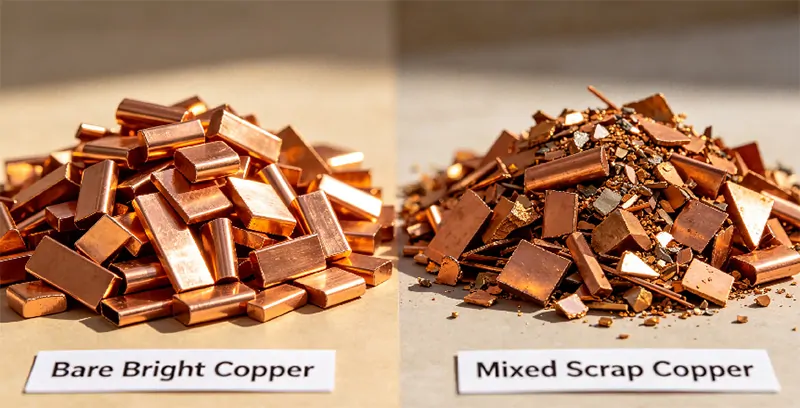
Bare bright copper wire is the highest grade you can recover, as it is clean, uncoated, and nearly pure. #1 copper includes clean tubing, bus bars, and heavy copper pieces with minimal contamination.
#2 copper usually contains paint, oxidation, or solder, so you need additional cleaning before reuse. Insulated copper wire requires you to remove the outer layer to access the metal, while mixed scrap from motors, radiators, or e-waste often needs more complex separation before you can recover usable copper.
Equipment Commonly Used in Copper Recycling
Two Shaft Shredders
Large copper cables, motors, radiators, and mixed scrap often need to be reduced in size before separation. Two shaft shredders are commonly used to process these materials and prepare them for downstream recycling operations.
Eddy Current Separators
After shredding, copper is typically mixed with other metals and non-metallic materials. Eddy current separators help recover copper and other non-ferrous metals from mixed material streams, improving material purity and recovery efficiency.
Copper Balers
Once copper has been processed and sorted, copper balers can be used to compact the material into dense, manageable bales. This helps simplify storage, transportation, and handling throughout the recycling process.
Challenges in Copper Recycling
Copper recycling is not always straightforward, because incoming scrap can vary a lot in condition. Paint, plastic, rubber, oil, and other contaminants can lower material quality and make processing less efficient.
You also often deal with mixed materials, where copper is attached to steel, aluminum, or plastic parts. In addition, very small copper particles can be lost during processing, and market price changes can affect how profitable recycling is.
FAQs
Q: How do I know if scrap copper is worth recycling?
A: You can judge it by its copper content, cleanliness, and how much contamination it carries. In general, the cleaner and more concentrated the copper, the better its recycling value.
Q: What is the difference between scrap copper and copper alloy scrap?
A: Scrap copper is mainly made of copper, while copper alloy scrap contains copper mixed with other metals such as zinc, tin, or nickel. You need to identify the difference early because alloy scrap may require different handling.
Q: Can I recycle copper from old electrical appliances?
A: Yes, many old appliances contain usable copper in motors, wiring, and internal components. You may need to dismantle or separate the units first to recover the copper efficiently.
Q: How does the condition of incoming scrap affect the recycling results?
A: The condition of the scrap affects how much preparation, separation, and refinement you need to do. If the material is heavily contaminated or mixed, your recovery rate usually drops.
Q: Can copper scrap be recycled with other metals in the same load?
A: Yes, mixed metal loads can be recycled, but they usually need more sorting and separation before the copper can be recovered properly. Keeping materials separated from the start usually improves results.
Final Thoughts
The copper recycling process involves several key stages, including collection, sorting, size reduction, material separation, and refining. As copper recycling continues to grow worldwide, equipment such as shredders, separators, and balers play an important role in supporting efficient processing, with manufacturers like ENERPAT providing solutions for a wide range of copper recycling applications.
Enerpat is a global company specializing in waste-recycling and disposal solutions, with a mission to help customers build a better, more sustainable world. We are a leading global provider for municipal and industrial clients, helping them recycle and dispose of waste, reduce costs and consumption, and create more value.
We focus on sorters, shredders, balers, shears, and disposal equipment for a wide range of recycling needs. Enerpat believes that “Quality Transform The World.” We deliver the industry’s highest levels of quality and service. Choosing Enerpat means choosing trust and value.
 English