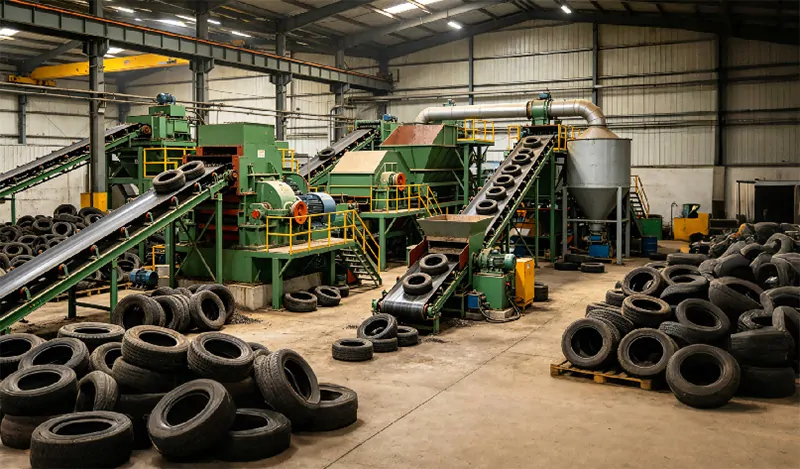
Waste tyres are generated every day by passenger cars, trucks, and industrial vehicles. Not all tyres can be handled in the same way, and not every recycling method produces the same result. If you understand the process clearly, you can improve efficiency, reduce contamination, and increase the value of the final recycled materials.
The following sections explain what tyre recycling means, whichs materials can be recovered, how the process works, and what machinery is used in a complete recycling plant.
Why Tyre Recycling Matters
Tyre recycling matters because it helps you turn waste tyres into usable resources. Instead of sending tyres to landfills or long-term storage, you can recover rubber, steel, and fiber and put them back into the value chain.
For your recycling business, that means less waste, better material use, and more commercial value from each batch. When you handle the process well, you can also keep the operation cleaner and more efficient.
What Can Be Recycled From Waste Tyres
Waste tyres can give you three main recoverable materials: rubber, steel, and fiber. Each one has its own value, and each one needs to be separated properly if you want a clean final output.
Rubber Granules and Rubber Powder
Rubber is the main product you usually recover from waste tyres. After shredding, granulating, and screening, you can turn it into rubber granules or fine rubber powder for flooring, sports surfaces, and asphalt use. Clean and properly sized rubber output usually brings better market value.
Steel Wire
Steel wire comes from the reinforcement inside the tyre. Once recovered, you can send it back into the metal recycling stream and get more value from the same batch of material. High separation efficiency also helps improve product purity and protects your equipment.
Fiber
Some tyres also contain textile fiber, which needs to be removed during the process. Even though fiber has lower value than rubber or steel, it still matters because it helps keep the final material clean and stable. Good fiber removal makes the whole recycling line work better.
Tyre Recycling Process Flow
1. Tyre Collection and Feeding
This step sounds simple, but it matters more than many people think. Good feeding helps you keep the process stable and reduces unnecessary downtime. For your operation, this means better control from the very beginning.
2. Pre-Shredding
Once the tyres enter the line, the pre-shredder reduces them into smaller pieces. This step helps lower the tyre volume and makes the material easier to handle in the next stages. It also takes pressure off the downstream machines, which is important if you want the line to run consistently.
3. Steel Separation
After shredding, steel wire needs to be separated from the rubber material. This is one of the key steps in the whole process because it improves material purity and protects the machines that follow. If the steel is not removed properly, it can affect both output quality and equipment performance.
4. Granulation
After the steel separation stage, the shredded material goes into granulation. Here, the rubber is reduced into smaller pieces or powder depending on the target product size. This is the stage where waste tyres start turning into real recycled material that can be sold or reused.
5. Screening and Sizing
Once granulation is complete, the material needs to be screened and classified by size. This step helps you keep the final output more uniform, which is important if your buyers expect stable product quality. It also makes the whole line look more professional and easier to manage.
6. Final Material Collection
At the end of the line, rubber granules, rubber powder, steel wire, and fiber are collected separately. Keeping these materials apart helps you maintain better purity and makes storage or sale much easier. In a well-run plant, this is where the whole process starts to show its real value.
Main Machinery Used in Your Tyre Recycling Plant
5.1 Complete Tyre Recycling Plant
A complete tyre recycling plantgives you a full system instead of a single machine. It is designed for businesses that want to handle tyres from feeding to final material collection in one line. With a complete plant, you can better control the process, the quality, and the overall output.
5.2 Double Shaft Tyre Recycling Shredder
The Double Shaft Tyre Recycling Shredder is usually the first major machine in the recycling process. It takes whole tyres and reduces them into manageable pieces, which is the key step before any separation or granulation.
This machine helps lower tyre volume and prepares the material for the next stages. If you want a stable line, this shredder is where it all starts.
5.3 Tire Steel Wire Separator
The Steel Wire Separator is the machine that removes steel from shredded tyre material. It is critical for improving purity and protecting downstream equipment from wear. In a well-run plant, steel separation is one of the steps that directly affects how clean your final product is and how long your machines last.
5.4 Tyre Granulator Machine
The Tyre Granulator Machine takes the shredded material and reduces it into smaller rubber granules or powder. This is the stage where waste rubber becomes a more standardized and usable product. It is widely used in fine recycling lines, especially when you need consistent size and quality for your buyers.
5.5 Scrap Tyre Baler
The Scrap Tyre Baleris used to compress tyres into compact bundles. This makes storage and transport much easier, especially for tyre collection businesses and recycling facilities with limited space.
In some projects, baling is also used as a pre-processing step before the tyres enter the recycling line.
Applications of Recycled Tyre Materials
Recycled tyre materials are used in many different industries, not just in one niche market. Rubber granules are commonly applied in flooring, playground surfaces, sports tracks, and asphalt modification, where durability and shock absorption matter.
Steel wire can return to the metal recycling chain and be reused in other steel products, which adds value to your overall operation. The fiber removed from tyres may be used in secondary processing or other industrial applications.
When you think about it this way, every part of the tyre has a potential use, and that is what makes the whole recycling business more viable in the long run.
FAQs
Q: What types of tyres are usually accepted in a recycling plant?
A: Most plants handle passenger car tyres, truck tyres, and some OTR tyres, but the exact range depends on the line design and equipment capacity.
Q: How long does a tyre recycling line usually last?
A: Service life depends on daily output, maintenance, and feedstock quality, but a well-managed line can run for many years.
Q: Is it necessary to have trained operators?
A: Yes. Even a stable line performs better when the operators understand feeding, monitoring, and basic troubleshooting.
Q: Does the plant need a large workshop space?
A: Space requirements depend on capacity and layout, and a compact line can be arranged differently from a larger industrial setup.
Q: Is the recycled material easy to sell?
A: Market demand depends on local buyers, product consistency, and material cleanliness, so stable output usually sells more easily.
Final Thoughts
Industrial tyre recycling is not only about waste treatment, but also about creating long-term value from the materials you process. When you choose the right equipment and the right recycling line, you can improve efficiency, recover more usable output, and build a more profitable operation. With ENERPAT, you get a reliable tyre recycling solution designed to help you turn waste tyres into valuable resources.
Enerpat is a global company specializing in waste-recycling and disposal solutions, with a mission to help customers build a better, more sustainable world. We are a leading global provider for municipal and industrial clients, helping them recycle and dispose of waste, reduce costs and consumption, and create more value.
We focus on sorters, shredders, balers, shears, and disposal equipment for a wide range of recycling needs. Enerpat believes that “Quality Transform The World.” We deliver the industry’s highest levels of quality and service. Choosing Enerpat means choosing trust and value.
 English