Beginning the wasted tire shredding business, it’s not only about buying a tire shredding machine, but also needs stable supply, clear product sale direction and the eqiupment matched with you business. Whether you choose to produce car tire chips, tire TDF materials,or rubber granules, the suitable device optional choice helps with the operation costs,and prepares for future growth.
2.What should consider before you startingwith the tire shredding business?
Before investing the equipment, you should think carefully about the three factors.
Wasted tire supply: caculating the daily proecssing volume, looking for stable sources, eg.the tire retailers, vehicle service centers, and fleet operators.
Target Market: confirm the buyers needs about particle size, steel content and quality
Site requirements: space , power supply and storage condition, especially about local regulations for processing and storage
These factors will help you identity with your truly need for eqiupment capacity and processing procedures on your recycling business.
3. How to choose the suitable Tire Shredder?
Match the machine with your tire types
Passenger tires and truck tires have differences about dimensions and structures. Before buying, you need to determine the machine’s feed-size material. Pay attention to the reqiured specialized eqiupments. For tire recycling facilities handling whole tires, consideration may be given to utilizing a Double Shaft Tire Recycling Shredder for primary size reduction and shredding. When selecting the appropriate model, key considerations should include tire dimensions, target processing capacity, and desired output particle size; ensure that the equipment configuration meets current operational requirements while also accommodating potential future expansion plans.
For a typical waste tire recycling line, the procedures will invlove these steps:
Secondary shredding: The material is reduced into approximately 5-15 mm, during this stage most of the steel wire processed by a Tire Steel Wire Seperator.
Third shredding: A Tyre Granulator Machine processes the material into smaller particles, typically around 0.5–3 mm, depending on the system configuration.
We should know that not every recycling operation needs these thress stages. If your goal is to reduce the whole tires into pieces for storage, the primary shredding is enough. If your operation is aimed at producing rubber granules, you will need to evaluate the whole line, including secondary shredding, steel seperation and granulation.
Take care about Capacity and output size
Choosing the eqiupment based on daily estimated volume and target output size. The fixed capacity does not guarantee the actual prodction. The perfomance will be influenced by tire size, feeding conditions and whole-line configuration.
The primary tire shredder mainly processes the whole tires into large chips. If the target is to produce the rubber granules or powder, additional shredding, seperation and screening procedures are required.
Maintenance and long-term operation costs
Blade wear, spare parts, and downtime will also affect the long-term operation costs. Before purchasing, asking suppliers about the blades replacement,daily maintenance costs and technical support is needed.
4. What Equipment Does a Tire Recycling Business Need?
Secondary Shredder and Screen: Further reduces and classifies material by size.Double Shaft Tire Shredder: Reduces whole tires into smaller pieces for further processing.
Magnetic Separation Equipment: Helps remove ferrous steel from shredded material.
If you only need coarse tire chips, a standalone shredder may be sufficient. For rubber granules or powder, a more complete recycling line is generally required.
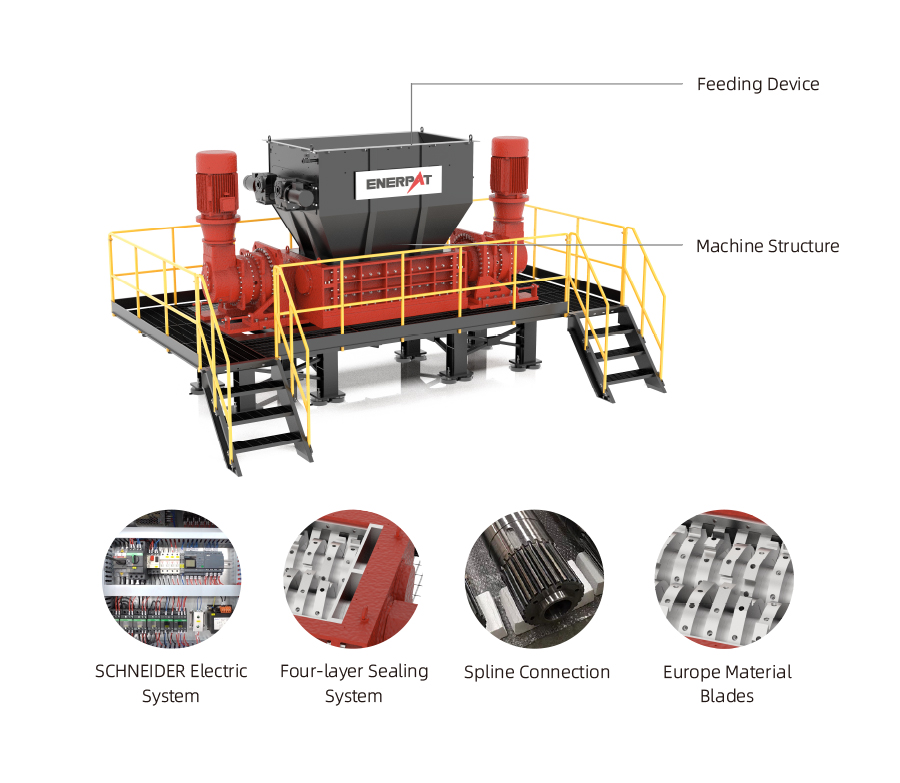
ENERPAT's Twin Shaft Tyre Shredding Machine is designed for primary tire shredding and can be evaluated as a standalone unit or as part of a larger recycling system. The final configuration should match your feedstock and output requirements.
5. What Determines the Cost of a Tire Shredding Business?
Except the investment, you should consider the costs produced by consistent operation.
Equipment and Installation: Costs vary depending on whether you choose a standalone machine or a complete recycling line.
Electricity and Labour: Power consumption and staffing
Maintenance: Blades, spare parts, and routine service
Material Handling: Inefficient feeding or mismatched downstream equipment
Market Demand: Revenue depends on local buyers, product specifications, transportation costs, and selling prices.
6. Which device suit your recycling business model?
business goal
eqiupment considerations
tire volume reduction
The primary tire shredder and feeding material transimission eqiument
tire chips or TDF supply
Primary shredding increasing preocessing device according to needs
rubber guranule production
Shredding, steel separation, granulation, and screening
large the tire recyling business
Modular eqiument with room for future additions
7.What Should You Ask Before Buying Tire Shredding Equipment?
Before selecting a supplier, confirm the following:
Can the machine handle your tire types and dimensions?
Does its capacity match your daily processing target?
Will the output meet your buyers' specifications?
Can the supplier evaluate your material before recommending a configuration?
What installation, commissioning, training, and warranty support is available?
Comparing these factors helps you assess the complete solution rather than focusing on purchase price alone.
8. Why Choose the ENERPAT For your Tire Shredding Business?
ENERPAT provides eqiupment methods for tire and rubber primary shredding, according to different materials and processing needs.
Twin Shaft Tyre Shredding Machine mainly uses for shredding whole tires into larger materiaIts product information lists a typical output of approximately 50–100 mm and a capacity of 10–15 tons per hour for the specified configuration. For broader rubber-waste applications, the Two Shaft Rubber Shredder can be evaluated for materials such as waste tires, conveyor belts, rubber hoses, and industrial rubber scraps.
1. Can I start with a standlone tire shredder?
Yes. If your business only requires primary shredding and the output meets your customers' requirements. Confirm whether the machine can be integrated with additional equipment later.
2. How do I choose the right tire shredder capacity?
Start with your daily tire supply, operating hours, and target output. Ask the supplier to confirm the suitable capacity for your specific material.
3. Can a double shaft tire shredder process truck tires?
Some models can process truck tires within their specified feed dimensions. Confirm the machine's limits, especially if you handle oversized tires.
4. Do I need a complete tire recycling line?
Not always. A standalone shredder may be enough for coarse tire chips, while rubber granules and powder generally require additional processing stages.
5. What should I check about after-sales service?
Confirm warranty terms, installation and commissioning support, operator training, technical assistance, and replacement-part availability.
8. Conclusion
Tire shredding business, firstly clear reqiurements about the material type, target market and final output. To some industries, the primary eqiuments can meet their needs: but to some projects which product rubber granules or powder, they will need a more complete procution line. By matching equipment to actual business needs, you can make a more informed investment and plan for future expansion. Contact ENERPAT to discuss a tire shredding solution tailored to your processing goals.
Enerpat is a global company specializing in waste-recycling and disposal solutions, with a mission to help customers build a better, more sustainable world. We are a leading global provider for municipal and industrial clients, helping them recycle and dispose of waste, reduce costs and consumption, and create more value.
We focus on sorters, shredders, balers, shears, and disposal equipment for a wide range of recycling needs. Enerpat believes that “Quality Transform The World.” We deliver the industry’s highest levels of quality and service. Choosing Enerpat means choosing trust and value.
 English