Project Overview: When Aluminium Chips Become a Production Bottleneck
In Southington, Connecticut—close to New Haven—metal processing and precision manufacturing are highly concentrated. A local manufacturer recently faced a familiar but urgent challenge:
Their existing briquetting machine failed
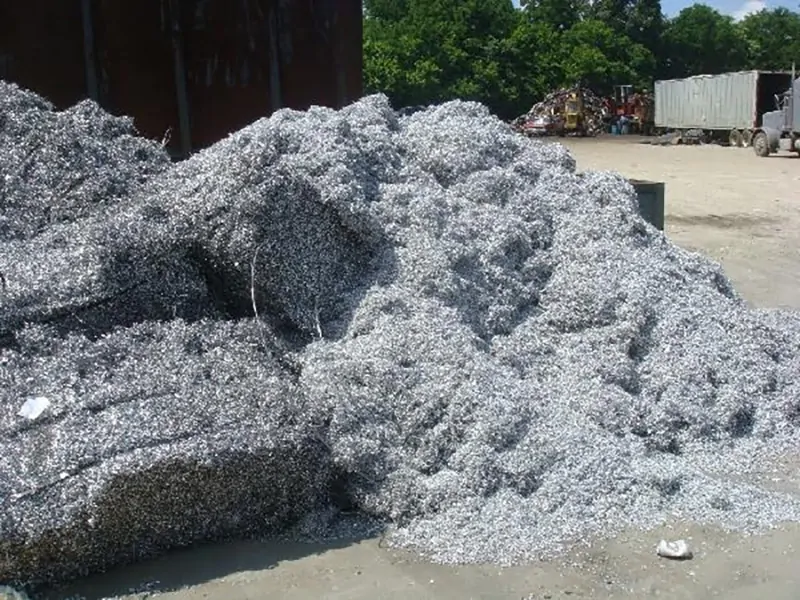
Aluminium chips began piling up rapidly
Daily output reached 600–1000 kg of loose chips
Workshop space was quickly consumed
Scrap handling became inefficient and unsafe
At this point, aluminium chips were no longer just a by-product—they were disrupting production.
You’ve likely seen the same situation: loose, oily chips taking over valuable floor space while coolant drips create safety and compliance risks.
Why Immediate Action Was Required: Compliance Pressure in Connecticut
In regions like Connecticut, handling oily aluminium chips is not optional—it is regulated.
Under requirements influenced by United States Environmental Protection Agency and Connecticut Department of Energy and Environmental Protection:
Manufacturers must:
Prevent oil-contaminated waste from entering drainage systems
Control Oil & Grease and suspended solids (TSS)
Avoid outdoor storage of dripping metal scrap
Manage industrial stormwater contamination risks
This is especially critical under:
Industrial wastewater discharge controls
Stormwater (NPDES) compliance
Regulated waste classification rules
If aluminium chips remain loose and oil-bearing, they may be treated as regulated industrial waste rather than recyclable metal.
That means:
Higher disposal costs
Environmental inspection risks
Increased liability
This regulatory pressure is one of the key reasons manufacturers invest in a complete aluminium chip pressing system.
The Solution: ENERPAT Aluminium Chip Pressing System
To solve the issue quickly, ENERPAT delivered an in-stock solution:
F800 Single Shaft Shredder + BM-1090 Metal Briquette Press
This integrated metal chip processing equipment line includes:
Shredder + Briquetting = Standard solution for metal swarf handling
This approach ensures:
Consistent feeding
Higher density briquettes
Better coolant recovery
Stable continuous operation
It’s no longer just equipment—it’s a process upgrade.
Results After Installation: From Waste Chaos to Controlled Process
After installation and testing, the customer reported strong satisfaction.
Key improvements:
Up to 80% coolant recovery
Significant reduction in chip volume
Cleaner workshop environment
Improved operator safety
Easier storage and transport
The system also helps meet environmental expectations and internal compliance standards.
Instead of managing loose scrap, the manufacturer now operates a controlled, efficient metal swarf compactor system.
Why the Customer Chose ENERPAT
When your production is at risk, speed and reliability matter.
This project succeeded because:
Equipment was available in stock
Fast delivery solved urgent backlog
Proven solution for aluminium chips
Integrated system, not standalone machine
Strong experience in global metal recycling applications
For manufacturers facing similar challenges, the decision is straightforward:
Fix the symptom, or upgrade the process.
Conclusion: Compliance-Driven Investment Meets Production Efficiency
In today’s manufacturing environment, aluminium chip handling is no longer just about scrap value.
It’s about:
Environmental compliance
Waste reduction
Shop-floor safety
Cost control
Sustainable operations
An aluminium chip pressing system is not an optional upgrade—it’s becoming essential infrastructure.
If your workshop is dealing with loose aluminium chips, coolant loss, or compliance pressure, now is the time to act.
ENERPAT provides complete metal chip processing equipment solutions tailored to your production needs.
Contact us today to find the right aluminium chip pressing system for your facility.
FAQ: Aluminium Chip Processing & Briquetting
Q1: Why should aluminium chips be briquetted instead of stored loose?
Loose aluminium chips take up large space, retain oil, and create environmental risks. Briquetting reduces volume, recovers coolant, and improves scrap value.
Q2: How much coolant can be recovered from aluminium chips?
A high-quality aluminum briquette machine can typically recover up to 70–80% of cutting fluids, depending on material conditions.
Q3: Do I need a shredder before briquetting aluminium chips?
Yes, especially for long or tangled chips. A Single Shaft Shredder ensures uniform feeding, improves density, and stabilizes briquette quality.
Q4: Are oily aluminium chips considered hazardous waste?
They can be classified as regulated waste if oil content and contamination are not controlled, especially under EPA and state-level regulations.
Q5: How does briquetting help with stormwater compliance?
By removing free oil and reducing leakage, briquettes prevent contamination from rainwater exposure, helping meet industrial stormwater regulations.
Enerpat is a global company specializing in waste-recycling and disposal solutions, with a mission to help customers build a better, more sustainable world. We are a leading global provider for municipal and industrial clients, helping them recycle and dispose of waste, reduce costs and consumption, and create more value.
We focus on sorters, shredders, balers, shears, and disposal equipment for a wide range of recycling needs. Enerpat believes that “Quality Transform The World.” We deliver the industry’s highest levels of quality and service. Choosing Enerpat means choosing trust and value.
 English