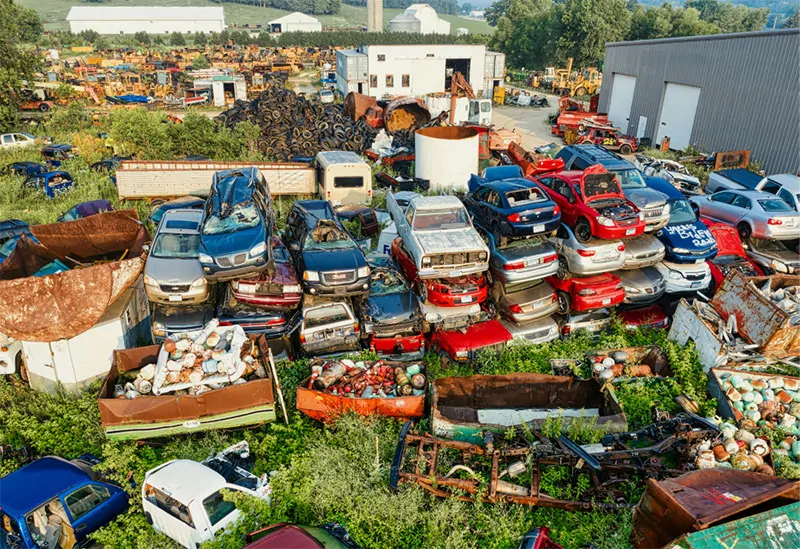
The automotive recycling industry is growing rapidly as end-of-life vehicles (ELVs) continue to increase and vehicle materials become more complex, with higher volumes of aluminum, plastics and electronic components. Traditional manual dismantling is no longer enough for you to keep up with processing demand.
As a result, advanced recycling technologies are becoming essential for improving efficiency and profitability, which will be discussed in the following sections.
Why Automotive Recycling Technology Matters
Modern recycling tecnology enable you to recover greater value from each vehicle while moving material faster. Efficient shredding and sorting systems help you improve metal separation, especially for aluminum and other high value non-ferrous metals, while helping you reduce reliance on labor and boosting overall margins.
At the same time, stricter environmental regulations and rising costs are putting pressure on operations. Proper dismantling and fluid removal procedures reduce contamination and safety risks, while advanced sorting technology helps you produce cleaner materials that are easier to sell and more compliant with regulations.
Key Automotive Recycling Technologies
1. Vehicle Dismantling Technology
Pre-treatment is the first step in helping you build an efficient recycling line. Removing engines, batteries, tires, and fluids before shredding reduces contamination and protects downstream quipment from damage. It is also allows you to recover reusable parts and properly handle hazardous materials.
A structured dismantling process not only improves safety, but also makes the entire line more stable and predictable. If you skip proper dismantling, contaminants like fluids and batteries can damage your shredder, increase maintenance costs, and lower the value of your output materials.
2. Car Shredding Technology
Shredding is the core stage where you process vehicles at scale. The Scrap Metal Shredder breaks vehicles into smaller, uniform pieces, making it easier for downstream systems to separate materials effectively. Consistent particle size helps you improve sorting accuracy and keeps the line running smoothly.
For yards handling higher volumes, a reliable shredding process directly impacts processing capacity and operational efficiency. For growing yards, choosing the right shredder capacity is critical, an undersized machine can limit your throughput, while an oversized system may increase unnecessary energy and operating costs.
3. Magnetic Separation Technology
Magnetic separation is used immediately after shredding to remove ferrous metals like steel from the material stream. Although the principle is simple, the actual effectiveness depends on the strength of the magnetic field and the system design. Efficient separation at this stage helps you reduce material mixing, improves steel recovery, and prepares the remaining stream for more precise non-ferrous sorting.
Even small amounts of mixed steel can reduce the value of your non-ferrous output.
4. Eddy Current Separation Technology
With the aluminum content in modern vehicles continuing to rise, eddy current separation is playing an increasingly important role. This technology helps you separate non-ferrous metals from mixed materials by using electromagnetic forces. In fact, an Eddy Current Separator allows you to recover aluminum and other valuable metals more efficiently, improving output purity and overall returns.
Without efficient eddy current separation, a significant portion of aluminum can be lost in mixed waste streams. This becomes especially important if you are processing high volume of ELVs with increasing aluminum content.
5. Sensor-Based and AI Sorting Technologies
Sensor-based and AI-driven systems are specifically designed to handle more complex sorting tasks that traditional methods cannot manage. By using optical sensors, infrared detection, and intelligent recognition, the AI Sorting Machine can identify different materials with high accuracy.
They help you reduce manual sorting, lower contamination rates, and help produce cleaner and more consistent outputs, especially important for meeting higher market and regulatory standards. If your output requirements are getting stricter or you are targeting higher-grade scrap markets, basic sorting methods may no longer be enough.
Integrated Equipment Systems for Automotive Recycling
An efficient recycling line depends on how well each machine works together, not just individual performance. By integrating shredding, separation, and sorting into one smooth process you can reduce handling, avoid bottlenecks and maintain a stable output.
You will usually get better results from a simple, well-matched system than from adding isolated equipment over time.
FAQs
Q: How do I choose between different automotive recycling technologies for my yard?
A: The choice depends on your input volume, material composition, budget, and desired output quality. Smaller yards may prioritize modular systems, while high-volume operations benefit from fully integrated lines.
Q: How do I evaluate the ROI of advanced recycling equipment?
A: ROI is typically measured through increased recovery rates, higher material purity, reduced labor costs, and improved throughput. Payback periods vary depending on scale and market conditions.
Q: How can I improve storage efficiency for processed metal?
A: Scrap yards can improve storage efficiency by compacting materials, organizing output streams, and using equipment that reduces volume before transport or resale.
Q: What is the difference between basic sorting systems and sensor-based sorting technologies?
A: Basic sorting systems rely on physical properties like magnetism or conductivity, while sensor-based systems use optical, infrared, or AI recognition to identify materials more precisely, especially for complex or mixed streams.
Q: How often should recycling equipment be maintained?
A: Maintenance frequency depends on production volume and equipment type, but regular inspection and preventive servicing are important for stable operation.
Q: Can one recycling line handle both cars and light trucks?
A: Some recycling lines can process both, but the system must be designed around vehicle size, processing capacity, and material output requirements.
Final Thoughts
Automotive recycling is shifting from manual dismantling to more efficient and automated processing. Advanced technologies now play a key role in improving recovery rates, lowering operating costs, and increasing scrap value. For scrap yards, choosing the right equipment is no longer optional, it is essential for long-term competitiveness. At ENERPAT, we provide reliable recycling equipment and integrated solutions to help optimize your operations and increase metal recovery.
Enerpat is a global company specializing in waste-recycling and disposal solutions, with a mission to help customers build a better, more sustainable world. We are a leading global provider for municipal and industrial clients, helping them recycle and dispose of waste, reduce costs and consumption, and create more value.
We focus on sorters, shredders, balers, shears, and disposal equipment for a wide range of recycling needs. Enerpat believes that “Quality Transform The World.” We deliver the industry’s highest levels of quality and service. Choosing Enerpat means choosing trust and value.
 English